Quiz
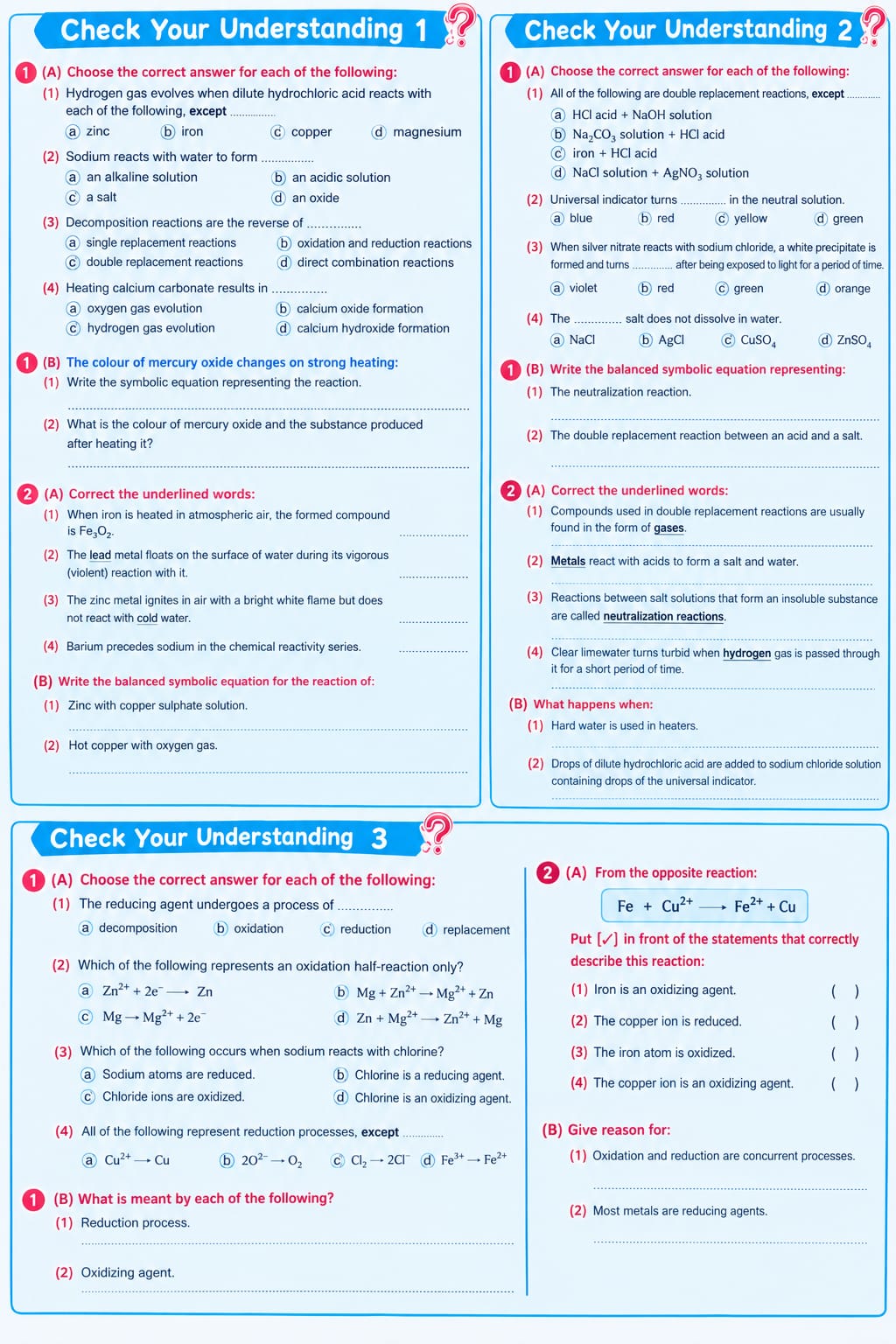
Test your knowledge of the lesson by taking the quiz below. Answer the questions to the best of your
ability and see how well you understand the different types of chemical reactions.

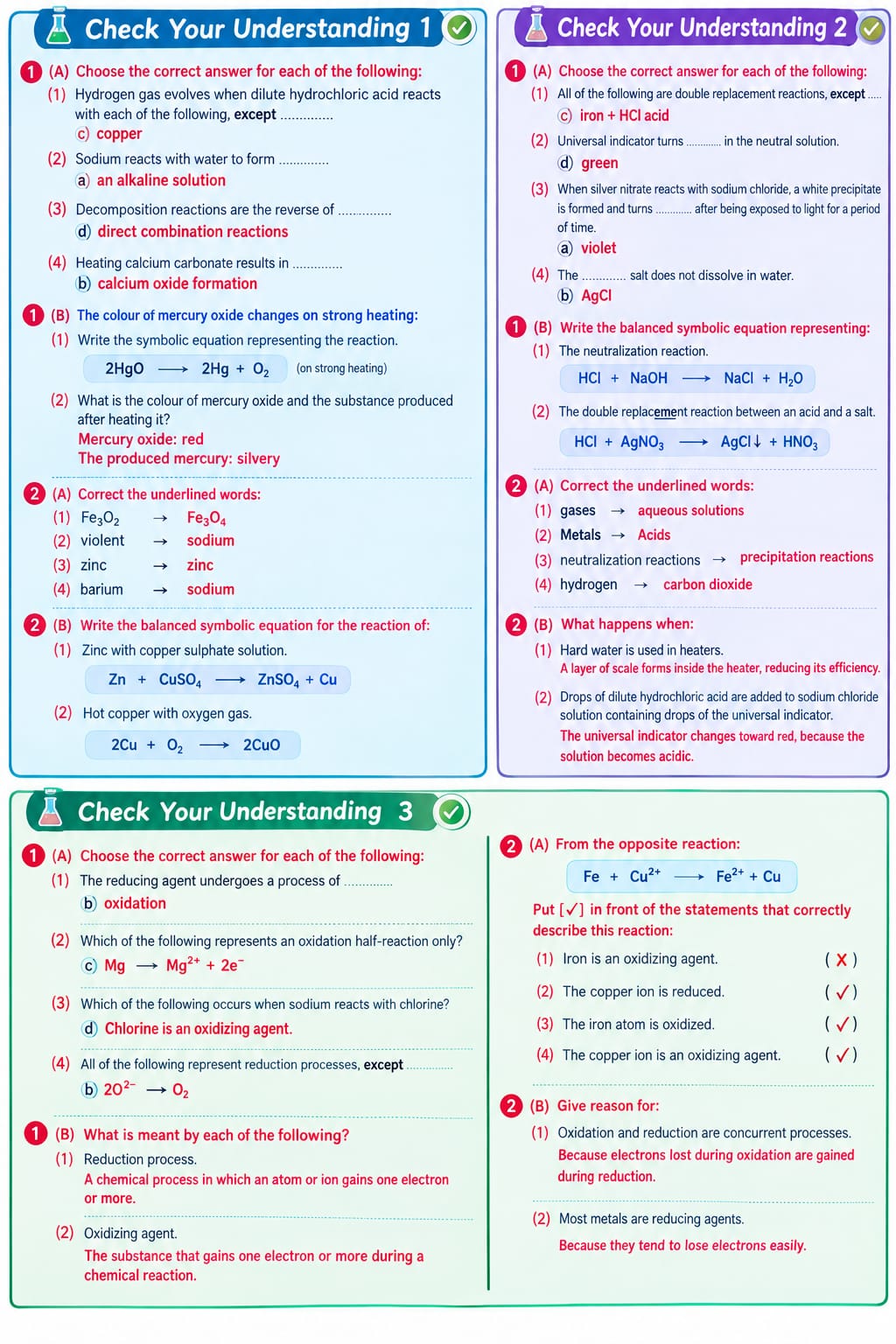
Direct combination reactions, involve the combination of two or more reactants to form a single product. The general form is A + B → AB. An example is the reaction between magnesium and oxygen to form magnesium oxide: 2Mg + O₂ → 2MgO.
Decomposition reactions involve the breakdown of a single compound into two or more simpler substances. The general form is AB → A + B. An example is the decomposition of mercury(II) oxide: 2HgO → 2Hg + O₂.
In single replacement reactions, one element replaces another element in a compound. The general form is A + BC → AC + B. An example is the reaction between zinc and hydrochloric acid: Zn + 2HCl → ZnCl₂ + H₂.
Double replacement reactions involve the exchange of ions between two compounds to form two new compounds. The general form is AB + CD → AD + CB. An example is the reaction between silver nitrate and sodium chloride: AgNO₃ + NaCl → AgCl + NaNO₃.
A chemical process results in an increase in the percentage of oxygen in or a decrease in the percentage of hydrogen in a substance.
A chemical process results in a decrease in the percentage of oxygen in or an increase in the percentage of hydrogen in a substance.
a chemical process in which an atom loses electrons
a chemical process in which an atom gains electrons
The substance that loses one electron or more during a chemical reaction.
The substance that gains one electron or more during a chemical reaction.
Oxidation-reduction reaction is represented by the following equation:
Zn⁰ + Cu²⁺SO₄²⁻ → Zn²⁺SO₄²⁻ + Cu⁰
Zn⁰ → Zn²⁺ = Oxidation
Cu²⁺ → Cu⁰ = Reduction
Zn = Reducing agent
Cu²⁺ = Oxidizing agent
Test your knowledge of the lesson by taking the quiz below. Answer the questions to the best of your
ability and see how well you understand the different types of chemical reactions.